

 Current position > News detail
『Sewer Flow Meter: Open Channel Wastewater and Effluent Monitoring』Related information(flow rotameter|digital flow meter|balo meter|hydraulic flow meter|volumetric meter|positive displacement meter|pitot tube flow meter|displacement meter|cfm meter|variable area flow meter|inline flow meter|differential pressure flow meter|calibrated flow meter|velocity meter|paddle wheel flow meter|oval gear flow meter|anemometer hvac|multiphase flow meter|doppler flow meter|thorpe tube flowmeter|heat flow meter)
Sewer Flow Meter: Open Channel Wastewater and Effluent Monitoring
Quick Answer: An open channel flow meter is the standard tool for gravity sewers and effluent outfalls. It pairs with a flume or weir to convert level into flow rate. If your pipe runs full 24/7, a flanged electromagnetic flow meter rated for sewage is often a better long-term choice.
Why Open Channel Flow Measurement Matters in Sewers
Most sewer lines run partially full by design. A pressure-based sensor in a non-full pipe gives garbage data because the wetted area changes constantly. The accepted way is to install a primary device like a Parshall flume or a V-notch weir and measure the water level just upstream. The geometry of the flume forces a known relationship between level and flow. That relationship is stored in the transmitter electronics. Silver Instruments supplies ultrasonic open channel flow meters that come preloaded with standard flume curves. You select the flume type during commissioning and the meter calculates flow instantly.
Flow Meter Technologies for Sewer and Effluent
Three technologies appear in wastewater open channel projects. Each has its place.
Ultrasonic open channel meters. A non-contact transducer mounts above the flow stream. It sends a 40 kHz pulse to the water surface and measures time of flight. No sensor touches the wastewater. Accuracy sits at 0.2% of range or ±1 mm, whichever is larger. The Silver Instruments UOC-200 ultrasonic meter outputs 4-20 mA HART and two relay alarms. It works for flows from 0.3 m³/h up to 40 000 m³/h depending on flume size. In practice, many plants use it for final effluent monitoring before discharge to a river or ocean outfall.
Electromagnetic flow meters for sewage. For pressurized sewer force mains that run full, a full-bore magmeter with PTFE or hard rubber liner is the first choice. DN50 to DN600 sizes are common. Electrodes made of Hastelloy C resist the sulfides and grease found in raw sewage. Because the meter needs a full pipe, we often install it on the discharge side of a lift station. Silver Instruments offers the EMF series, which carries ATEX Zone 1 certification for digester gas areas. A typical spec: 0.1% accuracy, 4-20 mA HART, Modbus RTU, and integrated PT100 temperature compensation.
Submerged velocity-area sensors. Less common but useful in large box culverts and stormwater drains. These combine a Doppler velocity sensor with a pressure level sensor. They suit sediment-heavy flows and can handle reverse flow events during heavy rain. We supply these mainly to municipal drainage authorities in Malaysia and the Philippines.
What a Sewer Flow Meter Must Withstand
Raw wastewater is a soup of solids, fats, hydrogen sulfide, and stray voltages. Any meter going into a sewer must handle these conditions without drift. Ultrasonic transducers need a front face that resists condensation buildup. Silver Instruments uses a PTFE-faced transducer with a built-in temperature sensor that compensates for speed-of-sound changes in the air gap. That matters when the morning temperature in the sewer drops 8°C compared to midday. Without compensation, an ultrasonic meter can drift 3% between shifts.
Hydrogen sulfide attacks copper and silver. If your site has a history of H2S corrosion, avoid meters with exposed PCBAs near the flow. We seal the transducer housing with an IP68 epoxy fill. The transmitter stays in a separate IP67 enclosure, usually mounted above the manhole rim.
Grease and scum are another problem. A V-notch weir handles floating solids better than a rectangular weir. We learned this early on from a poultry processing plant in Thailand. Their effluent carried fat lumps 15 cm across. A Parshall flume choked every three days. We swapped the primary device to a 120° V-notch with a stainless edge and the self-cleaning action of the falling nappe kept the weir crest clean. The inline ultrasonic level sensor saw a stable echo and the flow data trended flat. Maintenance dropped from five site visits a month to one.
Installation Advice from Field Sites
Most engineers skip this part, but the approach channel makes or breaks an open channel measurement. The flume or weir requires a straight, undisturbed approach section. The rule of thumb is 10 times the throat width for a Parshall flume, and about 15 times the weir height upstream for a V-notch. We have seen customer sites where the flume sits two meters after a 90-degree bend. The induced turbulence gave a l
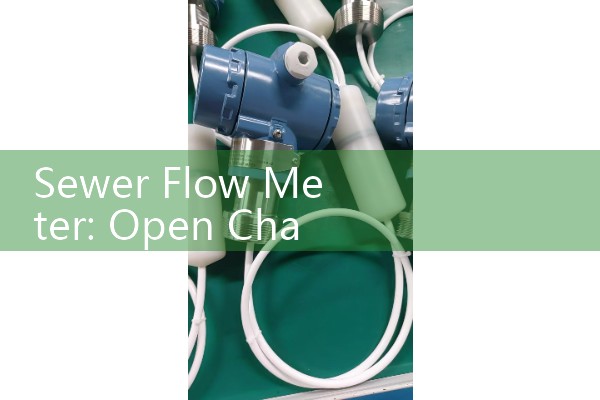
Another tip concerns manhole mounting. Do not place the ultrasonic transducer directly above any falling sewage cascade. The splashing and air bubbles swamp the acoustic return signal. Offset the sensor to the side and use a stilling well if the manhole is deep. Silver Instruments ships a mounting bracket kit with horizontal arm for 600 mm to 1200 mm manhole diameters. The arm clamps to the ladder rung so the transducer sits 300 mm above the maximum water level. That clearance prevents submersion during heavy rain surges.
Case Study: Wastewater Plant in Indonesia
Last year a municipal wastewater plant near Surabaya needed to monitor the treated effluent flow into a nearby river. The discharge was a rectangular concrete channel 800 mm wide, flowing 250 m³/h to 1 200 m³/h. They had tried a Doppler insertion probe but silt buildup coated the velocity sensor within two weeks. We proposed a Silver Instruments UOC-200 ultrasonic open channel flow meter with a 12-inch Parshall flume. The flume was cast in situ using our dimensional drawings. The transmitter was configured with the exact flume equation. Commissioning took one morning. The plant now receives a stable 4-20 mA signal to their SCADA, plus totalized volume via pulse output. The environmental agency checks the data once a quarter. The meter has passed all third-party audits without a single fail.
How to Specify a Sewer Meter Quickly
When you send a request to a manufacturer, include these parameters. It saves two rounds of emails.
Pipe or channel dimensions (width, diameter, DN). Flow range minimum, normal, and maximum in m³/h or L/s. Effluent characteristics: raw sewage, screened, primary effluent, final effluent, industrial wastewater with chemicals. Maximum temperature expected in summer. Conductivity if you consider an electromagnetic meter — raw sewage is typically 500 to 1 500 µS/cm, plenty enough. Water level variations and if the pipe surcharges during storms. Existing primary device: weir type, flume type, or none. If none, state whether you can install a flume or need a free-surface sensor only.
Send these details to Silver Instruments at [email protected]. Usually we reply with a preliminary recommendation and a budgetary quote within one working day. For urgent wastewater service requests, call +86-135-1213-1526 or message on Whatsapp at 86-135-12131526.
FAQ
Can an electromagnetic flow meter measure partially full sewer pipes?
No. An electromagnetic meter requires the electrodes to remain fully submerged. If the pipe runs less than full, the meter will under-report flow drastically. Use it only in pressurized force mains or full gravity sections.
What maintenance does an ultrasonic open channel flow meter need?
Wipe the transducer face once a month if condensation or dust builds up. Check the flume for debris after heavy rain. No moving parts to replace. The transmitter electronics have a design life of 15 years.
Can one meter measure both stormwater and dry-weather flow?
Yes, but you need a primary device that handles a wide range. A Parshall flume can measure flows from 2% to 100% of its rated capacity. The UOC-200 transmitter automatically scales the output. We have seen this in combined sewer overflow applications in Vietnam.
What output signals do these meters offer?
Standard outputs are 4-20 mA HART, passive pulse for totalization, and RS485 Modbus RTU. Silver Instruments also provides a wireless 4G data logger for sites without SCADA cabling.
How long does delivery take in Southeast Asia?
For common configurations like DN150 and DN200 electromagnetic flow meters or UOC-200 open channel meters, we ship within 5 working days from our warehouse in Nanjing. Custom flume sizes add 10 days for fabrication.
Get a Meter Quote Matched to Your Sewer Project
Send us your pipe size (DN), expected flow range, and type of wastewater. Email [email protected] or contact Silver Instruments on WeChat: +86 13512131526. We will recommend a specific meter model and include a price estimate. Our engineers cover projects across Australia, Latin America, the Middle East, and Africa with local after-sales support.