

 Current position >About Us
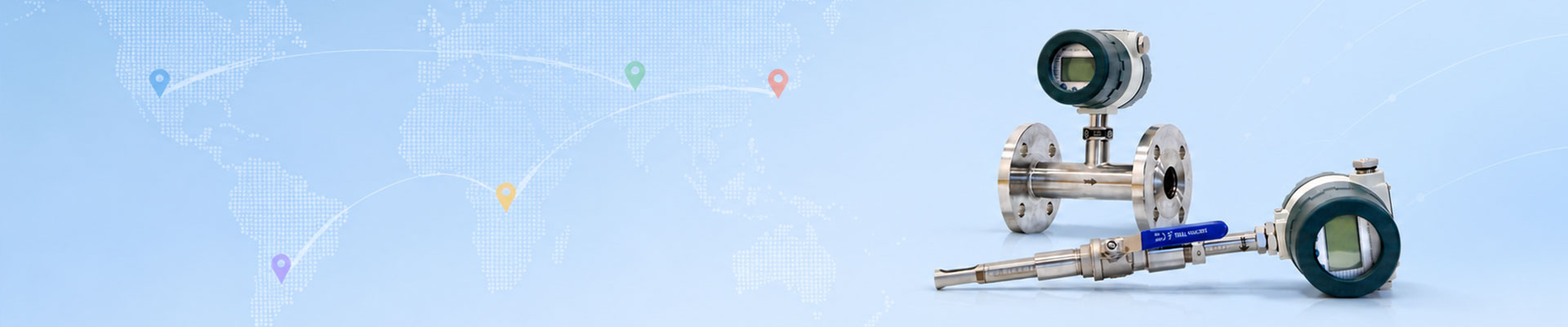
Velocity Meters and Paddle Wheel Sensors: Cost-Effective Liquid Flow Speed Insertion Tracking
Quick Answer
Velocity meters and paddle wheel sensors measure liquid flow speed by insertion into the pipe. They give a pulse or 4-20 mA signal proportional to flow rate. Silver Instruments supplies insertion paddle wheel meters for pipe sizes from DN15 to DN600 at lower cost than electromagnetic or Coriolis meters.
What Is a Paddle Wheel Velocity Meter
A velocity meter infers flow rate from the speed of a liquid. A paddle wheel sensor uses a small rotor with blades fitted into the flow stream. The liquid pushes the blades. Each blade pass creates a pulse. The transmitter converts that pulse into a flow reading.
In practice most engineers choose this type for clean water, cooling water, RO permeate, chemical dosing, and low viscosity process liquids. We have seen this on customer sites in Vietnam, Chile, Nigeria, and Saudi Arabia.
How the Sensor Works Inside the Pipe
The sensor body installs in a tee or saddle fitting. The rotor tip sits at 1/8 to 1/2 of the pipe diameter. This position places the rotor in the stable velocity zone. A Hall effect sensor or reed switch detects blade rotation. The output is a square wave pulse. The flow transmitter converts the pulse frequency to 4-20 mA or a digital totalizer value.
Here is the thing. Paddle wheel sensors need a clean liquid. Any fiber or solid can stop the rotor. That failure is fast and visible on site.
Typical Silver Instruments Paddle Wheel Meter Specifications
Our standard paddle wheel meter covers DN15 to DN200 as a wafer or tee mount. The insertion version covers DN200 to DN600 without cutting large pipe sections. Flow velocity range is 0.3 to 10 m/s. Accuracy is plus or minus 1.0 percent of full scale. Repeatability is plus or minus 0.5 percent. Outputs include pulse, 4-20 mA, and optional HART. Power supply is 24 VDC. Wetted body materials include polypropylene, PVDF, and 316L stainless steel. The rotor shaft can be ceramic or tungsten carbide. Temperature rating is -20 deg C to 80 deg C. Pressure rating is 10 bar for standard body types. Viscosity limit is 200 cP for water-like liquids.
Where Velocity Meters Fit in the Flow Meter Portfolio
Velocity meters and paddle wheel sensors cost less to buy and install than electromagnetic meters, ultrasonic clamp-on meters, and Coriolis mass flow meters. They do not match Coriolis accuracy for mass flow or electromagnetic meters for dirty conductive water. But for clean water, cooling tower makeup, RO permeate, and low viscosity chemicals they are practical.
So we recommend paddle wheel meters when the liquid is clean, the pipe is full, and the flow range is within 0.3 to 10 m/s. Most engineers skip this type for liquids with fibers, solids, or coating tendencies. Because those conditions stop the rotor and reduce repeatability.
Installation Notes for DN15 to DN600 Pipes
Install the sensor with a straight run of 10 pipe diameters upstream and 5 downstream. Use a full bore tee for pipe sizes under DN50. For larger lines use a saddle or insertion fitting. Keep the pipe full at all times. Mount the sensor horizontally or vertically with upward flow. Avoid mounting at the top of a horizontal pipe if air bubbles are present. Air will cause false high readings.
We have seen this problem on customer sites many times. One water treatment contractor in Indonesia installed a paddle wheel meter 2 pipe diameters after a 90 degree elbow. The rotor spun but the reading was unstable. After moving the sensor to a straight section the reading stabilized within 0.5 percent.
Common Applications by Industry and Region
Desalination plants in Chile and Peru use Silver Instruments paddle wheel sensors on permeate lines. A typical line is DN80 with flow velocity around 3.5 m/s. Th