

 Current position > News detail
『Gemu Flow Meter Sizing: Variable Area and Ultrasonic Solutions for High-Purity Chemical Lines』Related information(flow rotameter|digital flow meter|balo meter|hydraulic flow meter|volumetric meter|positive displacement meter|pitot tube flow meter|displacement meter|cfm meter|variable area flow meter|inline flow meter|differential pressure flow meter|calibrated flow meter|velocity meter|paddle wheel flow meter|oval gear flow meter|anemometer hvac|multiphase flow meter|doppler flow meter|thorpe tube flowmeter|heat flow meter)
Gemu Flow Meter Sizing: Variable Area and Ultrasonic Solutions for High-Purity Chemical Lines
Quick Answer: Gemu variable area flow meters fit small high-purity chemical lines from 0.5 L/h to about 5000 L/h. For larger pipes, low viscosity chemicals, or high turndown, inline ultrasonic meters usually give better repeatability and lower pressure drop. Send your flow range, pressure, temperature, pipe size and fluid name to Silver Automation Instruments for a same day sizing review.
This guide covers the sizing data that actually changes the quoted model. We supply variable area and ultrasonic flow meters to chemical users in Vietnam, Indonesia, Mexico, Saudi Arabia and Chile. Most engineers skip this part and send only the pipe size. We have seen this on customer sites many times.
Required Sizing Data for High-Purity Chemical Lines
Gemu flow meter sizing starts with seven data points. Minimum flow, normal flow, maximum flow, fluid name, density, viscosity and vapor pressure. Add pressure in bar and temperature in °C. Add pipe size DN and pipe material. For a dosing line with 30 percent hydrogen peroxide at 25 °C, the normal flow might be 2.5 L/h. The maximum might be 8 L/h. That small range points to a variable area meter with a 0.5 to 10 L/h tube.
For a bulk transfer line of 2000 L/h sulfuric acid at 1.5 bar and 35 °C, an inline ultrasonic meter becomes more practical. The key is the ratio between maximum and minimum flow. If the turndown exceeds 10 to 1, a variable area meter becomes difficult to read. An ultrasonic meter with 100 to 1 turndown is usually better.
Variable Area Flow Meter Sizing Points
Variable area meters are cheap, simple and do not need a power supply. They suit clean high-purity chemicals with low to medium viscosity. For DN15 to DN25 lines, common ranges are 0.5 to 10 L/h, 2 to 40 L/h, and 10 to 160 L/h. For DN40 to DN50 lines, ranges go from 100 L/h to 5000 L/h depending on the tube and float material.
Viscosity changes the reading. Here is the thing. A polymer solution above 50 cP will shift the float position even if the flow stays the same. Ask for a viscosity correction or select a meter calibrated for the actual cP value. For aggressive fluids, specify PTFE or PFA wetted parts and a PVDF or PTFE body. Gemu type variable area meters often include a magnetic indicator. That helps when operators cannot read the glass tube clearly.
Pressure drop matters on small chemical dosing skids. A variable area meter may drop 20 to 80 mbar. If the process only has 150 mbar of driving head, the meter will not work. Send the available pressure drop in bar or mbar with the flow range.
Ultrasonic Flow Meter Sizing for High-Purity Chemicals
Inline ultrasonic flow meters have no moving parts and low pressure drop. For high-purity chemical lines, a PFA lined ultrasonic meter handles acids, bases and solvents without metal contact. Clamp-on ultrasonic meters can be installed outside existing pipe but need clean pipe walls, a full pipe and no air bubbles.
Sizing an ultrasonic meter requires the speed of sound of the fluid. High-purity water and many solvents have known values. If the fluid is a mixture with changing concentration, the speed of sound will change. That can introduce error. For a methanol and water blend in a Philippine chemical plant, the concentration changed from 40 to
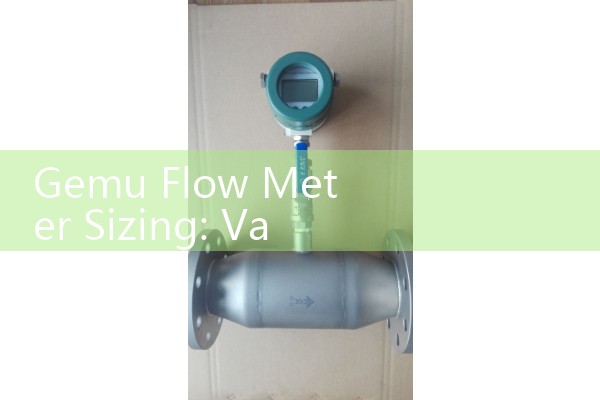
Flow range is not the only check. Pipe size DN15 to DN50 works for inline ultrasonic meters. Larger lines DN80 to DN250 work well with clamp-on versions. For low flow below 0.1 m/s, ultrasonic signal quality drops. Most inline meters need a minimum velocity of 0.2 m/s. If the pipe is oversized, reduce the pipe or accept poor repeatability.
Outputs, Hazardous Areas and Integration
For a chemical blending skid in Indonesia, the customer needed a 4-20 mA HART signal to the PLC and a local flow display. We supplied a variable area meter with a 4-20 mA transmitter and a built-in totalizer. The cabinet rated IP66. For a solvent line in Saudi Arabia, the request was ATEX Zone 1 and IECEx certification with PFA wetted parts.
Engineers often ask for pulse output for batch dosing. Ultrasonic meters can give pulse, 4-20 mA and Modbus RTU at the same time. Variable area meters usually give one analog output or none. Confirm the loop power available. A two wire 4-20 mA HART output needs 24 V DC. A four wire ultrasonic meter may need 90 to 260 V AC or 24 V DC. For temperature compensated readings, ask for a built-in PT100 sensor. That matters when the process temperature changes by more than 10 °C between batches.
How We Price and Quote a Sizing Request
We do not quote a flow meter until the flow range and fluid are fixed. Oversized meters are the most common problem we see. In practice, a meter sized for 5000 L/h on a line that runs at 200 L/h will read poorly. The same applies to corrosive streams. A 20 percent nitric acid line at 40 °C needs different wetted materials than a 2 percent sodium hydroxide line at ambient temperature.
Send us your pressure in bar, temperature in °C, pipe size in DN, flow range in kg/h or L/h, fluid name and required output. We will return a shortlist of two or three meters. Typical response is under 24 hours. You can reach Silver Automation Instruments by Tel +86-25-68650347, WhatsApp +86-25-52155837 or WeChat +86 15365082610. Our website is flow-meter.com.au.
FAQ: Gemu Flow Meter Sizing and Ultrasonic Options
Can I replace a Gemu variable area meter with an ultrasonic meter on the same line? Yes, if the line stays full and the flow velocity is above 0.2 m/s. Check the wetted material compatibility and the required straight pipe run before the meter.
What is the typical accuracy of a variable area meter for high-purity chemicals? Expect 1 to 4 percent of full scale depending on the tube, float and calibration. Ultrasonic inline meters usually give 0.5 to 1 percent of reading.
Which meter handles low conductivity chemicals better? Ultrasonic meters do not need conductivity. Variable area meters also do not need conductivity. Electromagnetic flow meters are the wrong choice below 5 µS/cm unless a special design is used.
What pipe sizes suit inline ultrasonic meters for chemical lines? DN15 to DN50 is common for PFA lined inline ultrasonic meters. DN65 and larger can use clamp-on ultrasonic or flanged inline designs.
What data do you need to size a chemical flow meter? Send minimum, normal and maximum flow, fluid name, density, viscosity, pressure in bar, temperature in °C, pipe size DN, pipe material and the required signal output.