

 Current position > Product detail
『Water Flow Meter Pulse Output: Telemetry Systems for Remote Data Logging』Related information(flow rotameter|digital flow meter|balo meter|hydraulic flow meter|volumetric meter|positive displacement meter|pitot tube flow meter|displacement meter|cfm meter|variable area flow meter|inline flow meter|differential pressure flow meter|calibrated flow meter|velocity meter|paddle wheel flow meter|oval gear flow meter|anemometer hvac|multiphase flow meter|doppler flow meter|thorpe tube flowmeter|heat flow meter)
Water Flow Meter Pulse Output: Telemetry Systems for Remote Data Logging
Quick Answer: Pulse output from a water flow meter sends a frequency or contact closure signal that directly represents a unit volume. Remote telemetry systems capture these pulses to log totalized flow and instantaneous rate without analog drift. For water distribution, irrigation, or wastewater networks, this remains the simplest and most noise-immune way to bring flow data into an RTU, PLC, or wireless data logger over long distances.
Most engineers choose a water flow meter with pulse output when they need reliable totalizer data at a remote station. The flowmeter generates a pulse per unit volume, for example 1 pulse per litre or 1 pulse per 10 litres. A remote monitoring unit counts those pulses, computes instantaneous flow rate from the pulse frequency, and stores the values or sends them to a SCADA host. Silver Automation Instruments supplies electromagnetic, turbine, and vortex flow meters with configurable pulse outputs for exactly these telemetry tasks.
Why Pulse Output Wins for Remote Water Totalizing
Analog signals like 4-20 mA drift with temperature, cable resistance, and ADC resolution. A pulse output does not. In practice, when a water utility needs to bill customers based on monthly consumption, pulse counting removes digitizing errors. The only uncertainty is the meter K-factor tolerance. A digital input card on an RTU reads pulse edges at frequencies from 0.1 Hz up to 5000 Hz. That covers everything from trickle flows in a DN15 pipe to full bore in a DN600 main. We have seen sites in Southeast Asia where a simple dry-contact pulse signal travels 400 metres over a twisted pair without any repeater, feeding a GPRS logger next to a river intage pump station.
Pulse Output Signal Types You Will Encounter
Not all pulse outputs are the same. Silver Instruments meters can ship with open-collector NPN, PNP, or dry contact reed switch outputs. A typical electromagnetic flow meter for water offers an isolated open-collector pulse rated for 30 V DC, 100 mA. The pulse width is often configurable between 0.5 ms and 2000 ms so the receiving device can catch every edge. Here is the thing: if your telemetry system needs both flow total and instantaneous rate, we often supply a meter with dual outputs, one pulse for total and one 4-20 mA for rate, both wired to the same terminal box. This dual strategy keeps the RTU programming simple.
Telemetry Systems That Work with Pulse Flow Meters
A battery-powered remote logger with a digital counter input can sit inside an underground chamber with a pulse output water meter and push data via LoRaWAN or NB-IoT. We have supported installations in Vietnam, Indonesia, and Mexico that use exactly this architecture. The flow meter produces a 3.6 V or 12 V pulse train that wakes the logger only when a pulse arrives. Because the power budget is tiny, the whole station runs for years on a lithium pack. Silver Instruments can pre-wire certified barriers if the site is ATEX Zone 1, for example a biogas digester feed water line. You still get the pulse, safe and galvanically isolated.
Recommended Silver Automation Instruments Flow Meters for Water Telemetry
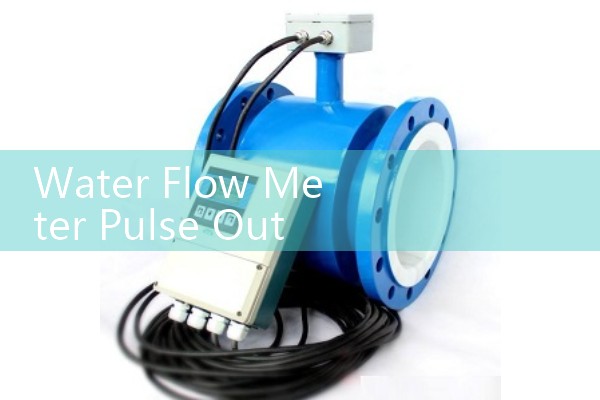
For clean water and irrigation we recommend the SI-LWGY turbine flow meter with a built-in reed switch pulse output. It covers DN10 to DN50, works from 0.04 to 40 m³/h,
A Real Field Example
Last year a water treatment plant in Malaysia replaced aging mechanical meters at 14 filter backwash lines. They needed a pulse output that a central PLC could scan every second. Each filter pipe was DN80 with flow around 60 m³/h. We supplied electromagnetic flow meters with open-collector NPN pulse, 1 pulse per 10 litres. The plant used a 24 V DC loop and standard digital input modules. The same pulse signal fed a GSM-based remote logger for alarm notifications when backwash flow dropped below a threshold. Because the pulse edges are clean, the PLC scan missed zero counts over 6 months of continuous operation. That is the kind of reliability pulse telemetry delivers.
Common Questions About Water Flow Meter Pulse Telemetry
1. Can I connect a pulse output water meter directly to a PLC input?
Yes, if the PLC digital input accepts the meter pulse voltage and frequency. We can set the pulse width to match the PLC scan time. Tell us your PLC input specs: input voltage, minimum on time, and input impedance. We will match the meter pulse output module.
2. What is the maximum cable length for a pulse signal?
With a 24 V DC open-collector output and a good shielded twisted pair cable, 500 metres works reliably at low frequencies below 1000 Hz. For longer distances, we recommend a signal repeater or a local RTU that can count pulses and transmit digitally.
3. Which Silver Instruments flow meter models support pulse output?
Our turbine, electromagnetic, and vortex flow meters all support configurable pulse output. The most common models are SI-LWGY (turbine), SI-MAG (electromagnetic), and SI-VT (vortex). For water telemetry, the SI-MAG electromagnetic meter with pulse and 4-20 mA is the most popular choice among Southeast Asian water utilities.
4. Can pulse output give me both flow rate and total?
A single pulse output can give both if your RTU or PLC calculates frequency for rate and accumulates pulses for total. Alternatively, request a meter with dual outputs: one pulse for total and one 4-20 mA for instantaneous rate. Many Silver Instruments electromagnetic meters support this dual configuration without extra cost.
5. What details do you need to quote a water flow meter for remote telemetry?
Send us your normal and maximum flow rate, pipe diameter (DN), fluid type, pressure (bar), temperature (°C), and the required pulse unit (e.g., 1 pulse per litre or 1 pulse per m³). Describe your remote logger or RTU input specs. We will select the right meter and pulse output module. Email [email protected], call or WhatsApp 86-135-12131526, or reach us on WeChat at +86 13512131526. You can also visit flow-meter.com.au to see the full range of Silver Automation Instruments water flow meters.