

『Gas thermal flowmeter』Related information(flow rotameter|digital flow meter|balo meter|hydraulic flow meter|volumetric meter|positive displacement meter|pitot tube flow meter|displacement meter|cfm meter|variable area flow meter|inline flow meter|differential pressure flow meter|calibrated flow meter|velocity meter|paddle wheel flow meter|oval gear flow meter|anemometer hvac|multiphase flow meter|doppler flow meter|thorpe tube flowmeter|heat flow meter)
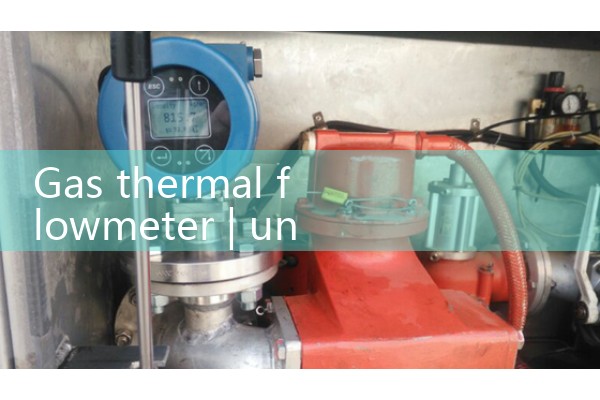
1. Can the installation head of a thermal gas mass flowmeter rotate?
The head of a thermal gas mass flowmeter can usually rotate, which is a standard design function. 1. The design of the meter head rotation function is mostly limited, such as the meter head of a digital gas mass flowmeter that supports rotation from 300 ° to 360 °, in order to adapt to different pipeline installation directions and on-site reading requirements. Rotating structures usually use universal joints or flange connections with locking functions, which can fix the meter head at any angle. 2. Specific rotation ability • Rotation range: Mainstream brands (such as Endress+Hauser, Siemens, Emerson) can rotate the meter head by more than 300 ° • Locking method: using anti slip gear disc structure or locking nut design to avoid vibration induced displacement • Cable protection: internal wiring adopts redundant design to prevent cable twisting during rotation. 3 Installation precautions: When rotating the meter head, it is necessary to: • Loosen the fixed bolts/nuts first, adjust them to the target angle, and then re lock them • Ensure that the sealing ring is intact to prevent water vapor from entering (the protection level usually needs to maintain IP67) • Avoid exceeding the calibrated rotation limit (usually with physical limit devices). 4 Some explosion-proof (Ex d/IIC T6) or high-voltage products with special model differences may limit the rotation angle, please refer to the product manual for details. For example, some models restrict 180 ° rotation to avoid explosion-proof joint surface failure. It is recommended to refer to the installation manual of the corresponding model before operation, as the specific rotation mechanism may v
2. What is the formula for a thermal gas flowmeter?
The core formula for a thermal gas flowmeter is related to mass flow rate, and the common form is Q=K × Δ T/(I × R). Before understanding this formula, lets first talk about its application background.
. Thermal gas flow meters are often used in industrial, laboratory, and other scenarios, such as monitoring gas flow rates in large pipelines or factory exhaust emissions. Its principle is to sense the heat carried away by the gas flow through a heating element and calculate the flow rate accordingly. 1. Formula disassembly: Q in the formula represents mass flow rate, usually measured in kg/s; K is the instrument coefficient, determined by the characteristics of the equipment itself; Δ T is the temperature difference, which refers to the temperature difference between the heating element and the gas; I and R are the heating current and sensor resistance, respectively. The faster the gas flow rate, the smaller the temperature difference Δ T, and the larger the corresponding flow Q value2. Precautions for equipment use: These instruments need to maintain a stable measurement environment. Sudden changes in gas composition (such as mixing with water vapor or impurities) can cause a shift in the coefficient K, affecting the results. When selecting a flowmeter, it is necessary to confirm the composition, temperature, and pressure range of the gas in advance. Thermal flow meters are also used in medical ventilators, boiler room gas control equipment, and other devices. In practical operation, engineers usually pre store multiple sets of coefficients K based on the gas type (such as oxygen, nitrogen, or mixed gas), and s
 Hot Blog
 Related AD