

『Oil Flow Meter for 5000 cSt: Prevent Clogging in High-Friction Polymer Fluids』Related information(flow rotameter|digital flow meter|balo meter|hydraulic flow meter|volumetric meter|positive displacement meter|pitot tube flow meter|displacement meter|cfm meter|variable area flow meter|inline flow meter|differential pressure flow meter|calibrated flow meter|velocity meter|paddle wheel flow meter|oval gear flow meter|anemometer hvac|multiphase flow meter|doppler flow meter|thorpe tube flowmeter|heat flow meter)
Oil Flow Meter for 5000 cSt: Prevent Clogging in High-Friction Polymer Fluids
Quick Answer: Fluids with viscosity over 5000 cSt, such as heavy fuel oil, silicone oil, and certain polymers, can easily clog standard flow meters. Silver Automation Instruments recommends oval gear flow meters with wide tooth clearances and heating jackets, or straight-tube Coriolis meters that have no moving parts to jam. Send us your operating pressure, temperature, and flow range, and we will quote a meter that stays clean and accurate.
Measuring high-viscosity fluids above 5000 cSt is a daily challenge in polymer production, marine fuel blending, and adhesive manufacturing. Common flow meters with tight internal spaces often seize up. The liquid cools, solidifies, or creates a high friction film that blocks rotors, electrodes, or impulse lines. We have seen this on customer sites many times. A paint factory in Malaysia once tried to use a small turbine meter for a 6000 cSt resin. Within two weeks the rotor stopped completely. That is why you need a meter designed to let the fluid pass without sticking.
Why Standard Meters Fail with 5000 cSt Polymer Fluids
Most turbine, vortex, and orifice meters require a clean, low-viscosity flow profile. At 5000 cSt, the Reynolds number is extremely low. The flow becomes laminar and sticky. Fluid adheres to internal walls. In paddle wheel meters, the coating adds drag and kills the signal. Even magnetic flow meters struggle if the fluid is not conductive, which many polymers are not. The real problem is clearance. If moving parts have tight gaps, the fluid bridges the gap and acts like glue. The meter then requires constant flushing or replacement.
Oval Gear Flow Meters Built for 5000 cSt and Above
Positive displacement oval gear meters are the workhorse for high-viscosity oils. Silver Instruments supplies oval gear meters from DN15 to DN80 with adjustable clearances. For polymer fluids with 5000 cSt to 100,000 cSt, we increase the tooth clearance and use hardened gears. This reduces friction and prevents jamming. The meter body can be made of cast iron, stainless steel 316, or special polymer-resistant materials. We also offer heating jackets for steam or electric tracing. In practice, keeping the fluid above its pour point inside the meter chamber is the best way to avoid clogging. The heating option will maintain a steady 80 °C or 120 °C depending on your fluid.
Our oval gear meters output pulse signals, 4-20 mA HART, or digital RS485 Modbus. The standard accuracy is ±0.5% of reading, even with viscosity changes. For hazardous areas, we can supply ATEX Zone 1 or IECEx certified models. A typical installation is a 25 mm oval gear meter on a polymer transfer line in a chemical plant in Saudi Arabia. The customer sends a 4-20 mA HART signal to their PLC and monitors batch doses of heavy base oil at 80 °C and 8000 cSt. No clogging, no maintenance issues for two years.
Coriolis Meters: A Clog-Free Alternative for Polymer Fluids
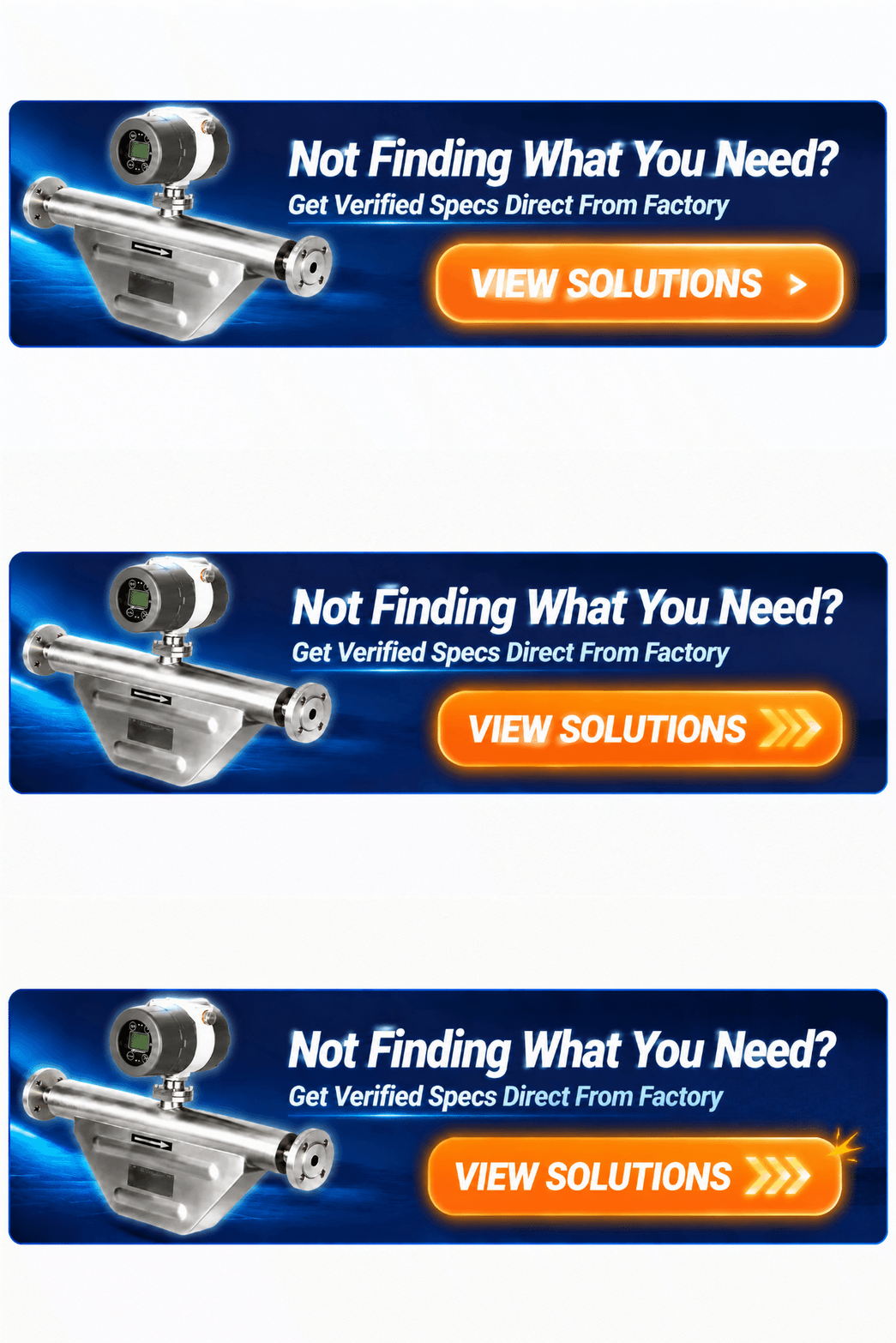
Sometimes you want no moving parts at all. Coriolis mass flow meters are a solid choice for 5000 cSt fluids because the straight measuring tube offers a full bore path. There are no narrow passages or gears. Fluid simply flows through the tube. Silver Instruments supplies straight-tube Coriolis
_600x400.jpg)
Heating and Insulation: The Practical Details
Engineers often neglect the cooling effect. A meter installed on a cold night in Melbourne or Argentina can freeze the polymer before the first run. We suggest you measure the fluid temperature at the meter inlet and the ambient temperature overnight. If the fluid pour point is above 30 °C, an electrical heating jacket with a PT100 sensor and a temperature controller is not optional, it is mandatory. Silver Instruments pre-installs the heating elements and insulates the meter body at our factory. You just connect the power and set the desired temperature. This arrangement saved a customer in Vietnam who was dosing 5000 cSt epoxy resin at 35 °C ambient. Without heating, the resin cured inside the meter after a weekend shutdown.
Send Us Your Specs and Get a Trusted Quote
Instead of guessing, share your data. Send us your pressure (bar), temperature (°C), pipe size (DN), and required flow range (e.g., 5 to 50 L/min). Tell us if you need ATEX, sanitary connections, or specific wetted materials. Our engineers will check the viscosity curve and recommend either an oval gear meter with the right clearances and heating jacket, or a Coriolis meter with a straight tube and low pressure drop option. You can reach us at [email protected] or browse oval gear and Coriolis models directly on flow-meter.com.au.
Frequently Asked Questions
Q: Can a standard oval gear flow meter handle 5000 cSt without modifications?
A: Not reliably. A standard clearance may work temporarily, but as soon as the fluid cools or contains particles, the rotor can jam. We always recommend increased clearances for continuous operation above 2000 cSt.
Q: Will the meter clog if the fluid cools down after the pump stops?
A: Yes, that is a common failure. To prevent this, you need a heating jacket that stays on during shutdown periods, or you must flush the meter with a hot solvent immediately after stopping the flow.
Q: Do you supply ATEX certified high-viscosity flow meters?
A: Yes. Silver Instruments provides ATEX Zone 1 and Zone 2 options for oval gear and Coriolis meters. The certification covers both gas and dust atmospheres. We can ship with the certificate within 3 to 4 weeks.
Q: What is the typical pressure drop for 5000 cSt oil in a DN25 oval gear meter?
A: At a flow rate of 20 L/min of 5000 cSt oil, the pressure drop is around 0.5 to 1.0 bar. For higher flow rates or colder fluid, the drop increases. Our engineers can calculate it from your fluid data.
Q: How do I request a quotation with a heating jacket?
A: Simply email us your process conditions: fluid name, viscosity at operating temperature, flow range, pipe size, and required heating temperature. We will respond with a complete proposal including the heater specifications.
 Hot News
 Related AD