

『Doppler Shift Ultrasonic Flow Meter: Measuring Aerated Acoustic Waves Inline』Related information(flow rotameter|digital flow meter|balo meter|hydraulic flow meter|volumetric meter|positive displacement meter|pitot tube flow meter|displacement meter|cfm meter|variable area flow meter|inline flow meter|differential pressure flow meter|calibrated flow meter|velocity meter|paddle wheel flow meter|oval gear flow meter|anemometer hvac|multiphase flow meter|doppler flow meter|thorpe tube flowmeter|heat flow meter)
Doppler Shift Ultrasonic Flow Meter: Measuring Aerated Acoustic Waves Inline
Quick Answer: A Doppler shift ultrasonic flow meter measures flow by detecting frequency changes from acoustic waves reflected off bubbles, solids, or other moving surfaces in a liquid. This inline method works well for aerated wastewater, sludge, slurry, and produced water. Silver Automation Instruments supplies clamp-on and inline Doppler flow meters with 4-20 mA, pulse, and optional HART outputs.
What Is a Doppler Shift Ultrasonic Flow Meter
A Doppler shift ultrasonic flow meter sends a continuous acoustic wave into the pipe. The wave hits moving reflectors such as suspended solids or gas bubbles. The reflected wave returns at a different frequency. The meter measures that frequency shift. The frequency shift is directly proportional to flow velocity. Inline or clamp-on transducers collect the reflected signal. The electronics convert the signal into flow rate using the pipe cross section area.
How Aerated Acoustic Waves Affect Inline Measurement
Aerated liquid contains small gas bubbles. These bubbles scatter acoustic energy. A transit time ultrasonic meter often fails in this condition because the bubbles break the transmission path. A Doppler meter uses the bubbles as reflectors. More bubbles usually give a stronger reflected signal. Inline measurement allows the acoustic wave to travel through the moving fluid. The Doppler shift comes from the velocity of the reflectors. This is why aeration basins, flotation cells, and gas lift systems often use Doppler flow meters.
Why Dirty Water and Sludge Are Good Applications
Most engineers skip this part. It matters. Clean water is not a good Doppler target. The signal needs particles or gas. Suspended solids from 0.1 percent to 40 percent are typical for Silver Instruments Doppler meters. Wastewater sludge, mining slurry, dredge discharge, and produced water all contain enough reflectors. The acoustic wave does not need the fluid to be conductive. Doppler does not need a minimum µS/cm conductivity. This helps in oil in water mixtures, sludge, and slurries where conductivity changes often. An electromagnetic flow meter may demand 5 µS/cm or more. A Doppler meter only needs moving reflectors.
Key Specifications and Recommended Pairings
Silver Instruments Doppler flow meters cover pipe sizes from DN15 to DN600. Accuracy is typically 1 to 3 percent of reading depending on installation and flow profile. Standard outputs are 4-20 mA and pulse. Optional HART, RS485, and Modbus RTU are available. The transmitter accepts 24 VDC or 100 to 240 VAC. Wetted materials include 316L stainless steel and ceramic transducer faces for abrasive service. Standard temperature rating is -20 to 80 °C. A high temperature version reaches 120 °C. Pressure rating depends on the flange and spool, usually PN16 or PN40.
For aeration return lines from DN50 to DN150, choose the clamp-on version. For dredging and mining slurry from DN150 to DN300, specify the inline flanged spool. For chemical dosing or low flow lines from DN15 to DN50, ask about the compact inline model. ATEX Zone 1 and Zone 2 housings are available for hazardous areas. For liquids above 200 cP, a lower frequency transducer may be better. The transmitter can accept an optional PT100 input for temperature compensation on water based liquids.
Installation Notes and Field Realities
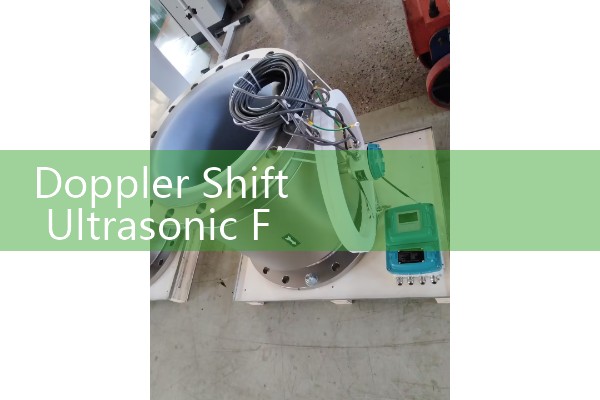
Clamp-on Doppler transducers do not need a pipe cut or process shutdown. The transducer face needs acoustic coupling gel and a clean pipe surface. Inline spool pieces are better for permanent installations where you can plan a shutdown or new build. Keep the sensor away from pumps, elbows, and partially full pipes. Standard straight run advice is 10D upstream and 5D downstream. In practice, many plants have shorter runs. Doppler is more forgiving than transit time but a distorted velocity profile still affects accuracy. If you have only 3D upstream, tell us. We can apply a correction factor in the transmitter.
How to Specify a Doppler Flow Meter Without a Site Visit
Here is the thing. You can get a workable quote with a few process details. Send us the pipe outside diameter and wall thickness if you want a clamp-on model. For inline spool meters, send the pipe size in DN and flange standard. We need the liquid type, solids content, gas content, flow range, pressure, and temperature. If you do not know flow range, tell us the pump capacity or pipe diameter. Our team uses that information to estimate velocity. A good velocity range for Doppler measurement is 0.3 to 10 m/s. Below 0.3 m/s the signal becomes less stable. Above 10 m/s the sensor may still work but wear and noise increase.
Applications We Have Seen on Customer Sites
A wastewater client in Malaysia measures return activated sludge in a DN200 steel pipe. The liquid has about 3 percent suspended solids. The Doppler meter gives a stable 4-20 mA signal to the plant PLC. A dredging contractor in Australia uses a DN250 inline Doppler meter on a sand and water mixture. The sand would destroy a mechanical meter within months. The Doppler sensor has no moving parts. A mining site in Chile monitors flotation tailings with air entrainment and fine solids. An oil field service team in Oman checks produced water with oil droplets and gas bubbles.
Request a quote. Send us your liquid, pipe size DN, flow range, pressure (bar), temperature (°C), and output signal preference. Tel: +86-25-68650347, WhatsApp: +86-25-52155837, WeChat: +86 15365082610. For data sheets, visit flow-meter.com.au. Silver Instruments responds within one working day.
FAQ
Can a Doppler flow meter measure clean water? No. Clean water without particles or gas produces a weak signal. Use an electromagnetic or transit time ultrasonic meter for clean water instead.
What minimum aeration or solids level does the meter need? A common minimum is 0.1 percent by volume of suspended solids or gas bubbles. Many Doppler meters from Silver Instruments work up to 40 percent solids.
Can I install the meter on an existing pipe? Yes. A clamp-on version mounts outside the pipe without a shutdown. An inline spool piece is available when the line can be opened or during a planned shutdown.
What outputs does Silver Instruments offer? Standard 4-20 mA and pulse. Optional HART, RS485, and Modbus RTU. The output configuration is set before shipment or through the keypad.
What pipe sizes and materials are supported? DN15 to DN600 depending on the model. Carbon steel, stainless steel, HDPE, and many rigid pipe materials work with clamp-on Doppler sensors. For soft or lined pipe, we need to check acoustic coupling.
 Hot News
 Related AD