

『Digital water flow meter』Related information(flow rotameter|digital flow meter|balo meter|hydraulic flow meter|volumetric meter|positive displacement meter|pitot tube flow meter|displacement meter|cfm meter|variable area flow meter|inline flow meter|differential pressure flow meter|calibrated flow meter|velocity meter|paddle wheel flow meter|oval gear flow meter|anemometer hvac|multiphase flow meter|doppler flow meter|thorpe tube flowmeter|heat flow meter)
1. How is an electronic water meter charged? Electronic water meters use electronic sensors to collect flow signals, which are processed by microprocessors to achieve accurate billing. The key is to convert mechanical or electromagnetic induced flow changes into digital signals and record them. The specific process and billing logic are as follows:
1. Core working principle: 1) Flow collection method: Electronic water meters generally retain the impeller or turbine structure of mechanical meters. When the water flow is focused on pushing the impeller to rotate, Hall sensors (detecting magnetic field changes) or photoelectric sensors (detecting blade obstruction of light) are used to collect rotation pulse signals. Each pulse corresponds to a fixed volume (such as 1 liter or 0.1 cubic meter). Some high-end models use ultrasonic flow meters to calculate flow velocity based on the time difference between the transmission and reception of ultrasonic waves in water, without mechanical wear and with higher accuracy. 2) Signal processing and measurement: The microprocessor converts pulse signals or ultrasonic data into digital flow values, accumulates them in real-time, and stores them in non-volatile memory (such as EEPROM) to prevent data loss during power outages.
2. Billing Logic 1) Ladder Water Price Adaptation, Leakage, and Allocation: Electronic water meters can have built-in ladder water price parameters (such as base price and excess price), automatically matching corresponding unit prices based on cumulative water consumption. Some models support downloading the latest ladder policies from remote search apps.
. 2) Remote/local billing: Remote billing uses wireless communication technologies such as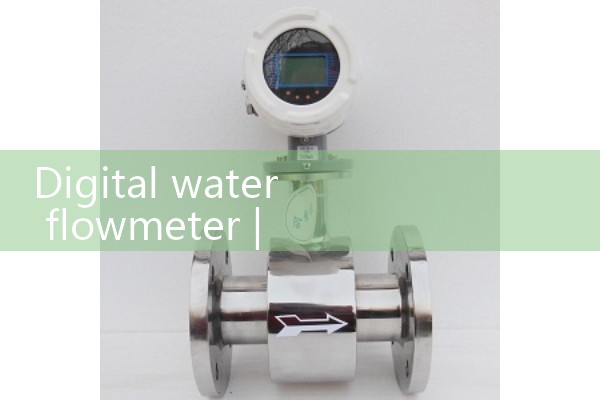
III. Billing Accuracy Guarantee 1) Accuracy Calibration: Before leaving the factory, it is calibrated according to national measurement standards, and the accuracy level is usually level 1 or level 2 (error ≤± 1% or ± 2%). Some models support remote calibration.
. 2) Anti tampering design: adopting a sealed structure and encrypted communication protocol to prevent physical damage or data tampering, ensuring fair billing. Summary: Through the process of "sensor acquisition → digital conversion → intelligent billing → remote/local management", electronic water meters achieve more accurate and flexible billing than traditional mechanical meters. They also support functions such as tiered water pricing and prepayment, improving water management efficiency.2. The five digits of the digital water meter are all black, and the last digit is a decimal point or a whole digit.
is a digit representing cubic meters, with a black scale before the decimal point and a red scale after the decimal point. As shown in the figure, the pointer on the 0.1 cubic meter
 Hot Product
 Related AD