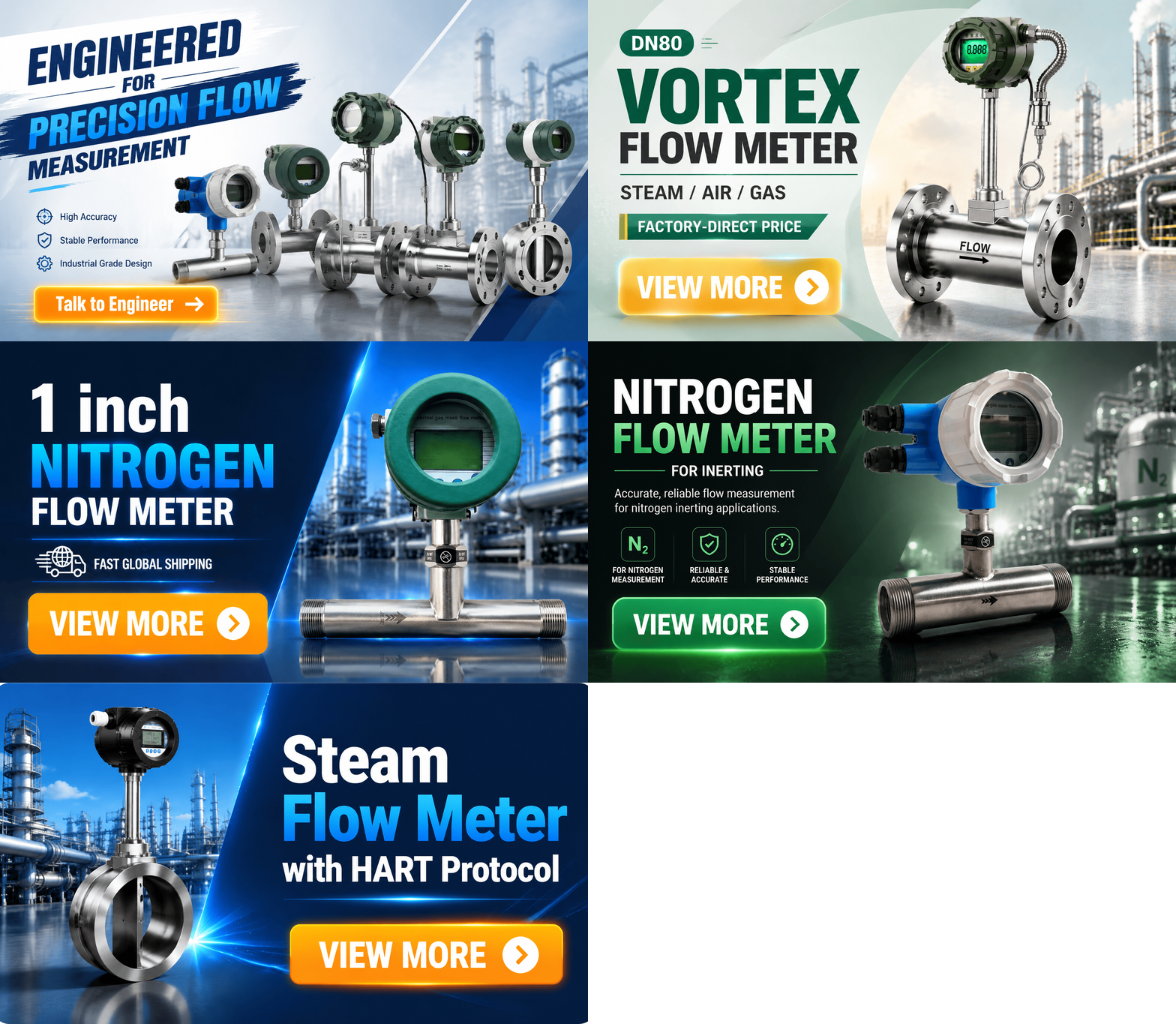


『Integrated vortex flowmeter』Related information(flow rotameter|digital flow meter|balo meter|hydraulic flow meter|volumetric meter|positive displacement meter|pitot tube flow meter|displacement meter|cfm meter|variable area flow meter|inline flow meter|differential pressure flow meter|calibrated flow meter|velocity meter|paddle wheel flow meter|oval gear flow meter|anemometer hvac|multiphase flow meter|doppler flow meter|thorpe tube flowmeter|heat flow meter)

1. What is the difference between a vortex flowmeter and an electromagnetic flowmeter?
The difference between a vortex flowmeter and an electromagnetic flowmeter is as follows:
1. Measurement principle. Vortex flowmeter: It uses the phenomenon of vortex generated by the flow of the vortex vane with the fluid, and calculates the flow rate of the fluid by measuring the rotation frequency or speed of the vortex vane.
. Electromagnetic flowmeter: Using the principle of electromagnetic induction, it measures the electromotive force experienced by a conductive fluid flowing in a magnetic field, thereby measuring the flow rate of the fluid. From the perspective of the original pronunciation, the difference between the two is obvious.2. Structural form: Vortex flowmeter: composed of vortex generator, piezoelectric element, guide element and magnetic circuit part.
. The transmitter housing is made of steel plate or aluminum alloy plate by integral die-casting, and the body and sensor are combined into an integrated unit instrument. Electromagnetic flowmeter: composed of a conductive tube, excitation coil, housing, and electrodes, with secondary meters installed at the upper and lower ends of the electrodes.III. Vortex flowmeter: it is mainly used to measure the flow of liquid, steam and gas, but it is not applicable to viscous liquid, granular solid medium and liquid containing foam and bubbles. Electromagnetic flowmeter: suitable for measuring the flow rate of various conductive liquids, but cannot measure non-conductive media.
Fourth, output signal vortex flowmeter: usually outputs a standard current signal of 4-20mA.
. Electromagnetic flowmeter: outputting a linear signal propor_600x400.jpg)
2. Vortex flowmeter | Technical points
The technical points of a vortex flowmeter mainly include accuracy, repeatability, sensitivity, response time, zero drift, and range drift. The specific content is as follows: Accuracy: Accuracy, also known as precision, refers to the degree to which the measurement results of a vortex flowmeter are close to the true value.
. Generally expressed as absolute error or relative sensitive bending pants error, absolute error=measured value - true value, relative error=absolute error/true value. Any type of flowmeter cannot accurately measure the true value of the measured parameter during measurement, and can only try to make the measured value as close to the true value as possible. In practical applications, the accurate standard instrument indication value is usually used as the true value of the measured medium. The difference between the indication value of the measuring flowmeter and the indication value of the standard instrument is the measurement error. The smaller the error value, the higher the reliability of the measuring flowmeter. Repeatability: Repeatability refers to the percentage of the difference between each measured value and the average value relative to the maximum scale range when the same vortex flowmeter is used for multiple repeated measure Hot Product
 Related AD