

『Flow Meter Keyence Sizing: FD-Q Series Clamp-On Sensors for Micro-Fluid Lines』Related information(flow rotameter|digital flow meter|balo meter|hydraulic flow meter|volumetric meter|positive displacement meter|pitot tube flow meter|displacement meter|cfm meter|variable area flow meter|inline flow meter|differential pressure flow meter|calibrated flow meter|velocity meter|paddle wheel flow meter|oval gear flow meter|anemometer hvac|multiphase flow meter|doppler flow meter|thorpe tube flowmeter|heat flow meter)
Flow Meter Keyence Sizing: FD-Q Series Clamp-On Sensors for Micro-Fluid Lines
Quick Answer: The Keyence FD-Q Series clamp-on sensor fits most micro-fluid lines from 3 mm to 16 mm tube outside diameter. The first sizing step is not flow rate. It is tube outside diameter plus tube material. Silver Instruments supplies comparable clamp-on flow meters and inline micro flow meters for the same ranges, with direct engineering support for customers in Vietnam, Indonesia, Australia, Mexico, Kenya, and Saudi Arabia.
What the FD-Q Series Actually Measures
The FD-Q Series uses a non-wetted clamp-on design. The sensor body attaches to the outside of a soft or semi-rigid tube. The sensor sends an ultrasonic signal through the tube wall and into the liquid. No part touches the process fluid. This matters a lot for high purity water, biotech media, chemical dosing, and food additive lines.
Because the sensor is non-wetted, it avoids corrosion and cleaning issues that inline meters face. But it also depends on tube material, tube hardness, and bubble-free flow. We have seen readings drift on silicone tubing with air bubbles. In practice, engineers should check the tube OD and hardness first.
Step One: Tube Outside Diameter Before Flow Range
Here is the thing. Many people start with flow range. That is a mistake. The FD-Q Series models are sized by tube outside diameter. A common field breakdown looks like this: FD-Q10C for 3 mm to 6 mm tube OD, FD-Q20C for 6 mm to 10 mm tube OD, FD-Q32C for 10 mm to 16 mm tube OD, and FD-Q50C for 16 mm to 24 mm tube OD. Confirm the exact model with a current datasheet because Keyence updates firmware and body sizes.
For a typical water line with 6 mm nylon tube and a flow range of 10 to 80 mL/min, the FD-Q10C or FD-Q20C is usually a safe start. For a 12 mm PTFE tube on a solvent dosing skid, the FD-Q32C range around 0.5 to 1000 mL/min gives more room. In all cases, give the tube OD in your RFQ. Without tube OD, a quote is only a guess.
Step Two: Liquid Type, Viscosity, and Conductivity
The FD-Q Series works best with clean liquids that have stable acoustic properties. Water, DI water, light solvents, and thin oils are common. For liquids above 50 cP, the ultrasonic signal gets weaker. For liquids with heavy solids or high turbidity, a clamp-on sensor may not hold stable output.
A paint manufacturer in Southeast Asia asked us about a 4 mm tube carrying solvent with viscosity around 3 cP. The clamp-on sensor worked after air bubbles were removed and the tube was fully filled. A dairy customer in Australia needed clean water flush detection on a 6 mm line. The sensor read 0.5 to 30 mL/min without touching the product. But for sticky syrups above 100 cP, we often suggest a positive displacement meter instead.
Step Three: Temperature, Pressure, and Tube Material
Temperature changes the speed of sound in the liquid. The FD-Q Series has temperature compensation, but you still need to tell your supplier the normal and maximum temperature. Most micro-fluid lines run from 10 to 60 degrees Celsius. If your line runs at 80 degrees Celsius or higher, specify that. If you have a PT100 temperature sensor nearby, use it as a reference.
Pressure is less critical for clamp-on sensors because the body does not contact the fluid. But tube expansion under pressure can change acoustic coupling. For lines above 3 bar, mention the tube material and wall thickness. We see this on chemical dosing skids where a reinforced PVC tube expands slightly at 4 bar. That small change can affect the sensor zero point.
Step Four: Output Signal and Response Time
Most FD-Q Series models offer 4-20 mA, PNP, NPN, or IO-Link output. For PLC integration in water treatment plants, 4-20 mA is the most common. For simple high/low alarm on a chemical dosing line, a PNP output works. Always check the response time setting. A fast response picks up pulsating flow from small diaphragm pumps. That pulsing can cause unstable readings. A slow response smooths the signal but adds lag.
In one case, a customer in Vietnam used a small solenoid pump with a 0.5 second pulse. The sensor was
Keyence FD-Q Sizing Example
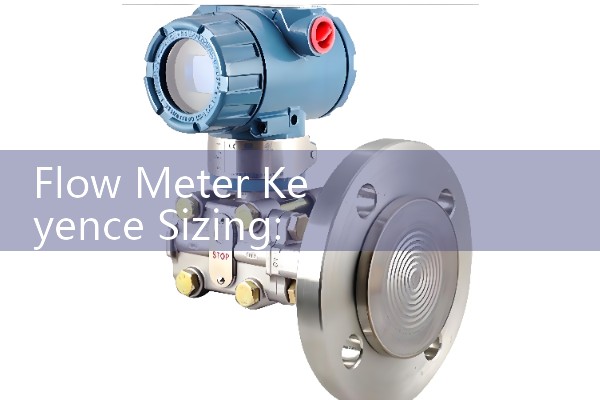
Let us walk through a real RFQ from last year. A customer in Indonesia needed to measure water flow in a 10 mm PTFE tube at 20 to 100 mL/min. Liquid temperature was 25 to 35 degrees Celsius. He asked for Flow Meter Keyence sizing for FD-Q Series clamp-on sensors. Our answer was simple: choose the FD-Q32C body, set the range to 0 to 200 mL/min, wire a 4-20 mA output to the PLC, and use a two second response. The quote also included a spare mounting bracket because PTFE tubes need firm contact.
He installed the unit in 30 minutes. The first reading was stable. That tells you the process works when you give the right details.
Alternatives from Silver Instruments
Silver Instruments supplies clamp-on and inline flow meters for micro-fluid lines. If you need a direct replacement for the Keyence FD-Q Series, send us the tube outside diameter, flow range, liquid, temperature, and output signal. We can quote a compatible clamp-on model or a small inline meter from our range.
For applications that need mass flow or density, a Coriolis mass flow meter is a better fit. A DN15 Coriolis meter can measure 0 to 50 kg/h with 4-20 mA HART output and ATEX Zone 1 approval if needed. For clean water with low flow, a small electromagnetic flowmeter may work if the line can be cut. For viscous food grade liquids, an oval gear flow meter handles 100 cP to 10000 cP without slipping. For gas micro-flows, a thermal mass flow meter is more stable than clamp-on ultrasonic.
One more detail. If your micro-fluid line is only 3 mm and the liquid has conductivity below 5 microsiemens per cm, a magnetic flow meter is not the right tool. A clamp-on ultrasonic or Coriolis meter is better. We help you avoid these mismatches before you place an order.
FAQ: Flow Meter Keyence Sizing and FD-Q Series Clamp-On Sensors
What tube sizes does the FD-Q Series cover?
The common range is 3 mm to 24 mm tube outside diameter across four body sizes. Check the model label because each body fits a narrow OD band. A tube that is too hard or too soft may need a special bracket.
Can the FD-Q Series measure flow below 0.1 mL/min?
For most models, the minimum stable flow is around 0.1 mL/min under ideal conditions. Very low flow below that level needs a Coriolis mass flow meter or a thermal mass meter. Do not expect a clamp-on ultrasonic sensor to read 0.01 mL/min on a 6 mm tube.
Does the clamp-on sensor work with opaque tubing?
Yes, the FD-Q Series can work with opaque tubes because it uses ultrasonic coupling, not optical sensing. But tube material and wall thickness matter. PTFE, PFA, nylon, and some silicone tubes work. Rigid tubing with poor acoustic coupling may need a different sensor.
What output signals are available on the FD-Q Series?
Most models support 4-20 mA, PNP, NPN, and IO-Link. Choose 4-20 mA for long cable runs to a PLC. Choose PNP or NPN for local alarms or simple controllers. Confirm the output type before ordering.
How does Silver Instruments compare on price and delivery for micro flow meters?
Silver Instruments supplies clamp-on and inline micro flow meters to OEMs, water plants, chemical sites, and food lines in more than 40 countries. We often ship small flow meters within 5 to 10 working days. For a firm quote, send your tube outside diameter, liquid type, flow range in mL/min, temperature in degrees Celsius, and output signal.
Contact Silver Instruments for a Sizing Check
Send us your tube outer diameter, liquid, flow range, temperature, and pressure. We will reply with a recommended sensor and a price. Contact Silver Instruments by Tel +86-25-68650347, Whatsapp +86-25-52155837, or WeChat +86 15365082610. For urgent RFQs from Vietnam, Indonesia, Australia, the Philippines, Kenya, the UAE, Mexico, or Chile, mention the country in your message. We respond faster when we know the site location and the pipe size.
 Hot Product
 Related AD